Mica Miller's story raises a question churches cannot afford to avoid: what happens when spiritual authority, intimate relationships and institutional power become entangled — and the person asking for help cannot find a genuinely independent pathway to safety?
What might have changed if robust safeguarding had been in place?
Why this is a safeguarding conversation, not just a true-crime story
It is easy to watch a documentary like this as a story about one marriage, one church and one set of allegations. But the thing worth our attention is the system around the story. Church safeguarding is not a policy on a shelf; it is culture, governance and accountability working together, day after ordinary day.
That means independent reporting pathways that do not run through the person a concern is about. It means procedural fairness — transparent process, truthful records, equal treatment. It means clear boundaries around pastoral and spiritual authority, so care never becomes leverage. And it means learning, as a community, to recognise a pattern for what it is — not to diagnose or accuse, but so people can make an informed choice about how and whether they keep participating.
What healthy churches should be able to answer
A healthy community is not one where nothing ever goes wrong. It is one that can answer these questions honestly, out loud, before anyone is in danger.
Can a woman raise a concern without retaliation?
Is there an independent pathway that sits outside the senior leader's authority?
Are coercive-control patterns recognised, named and understood?
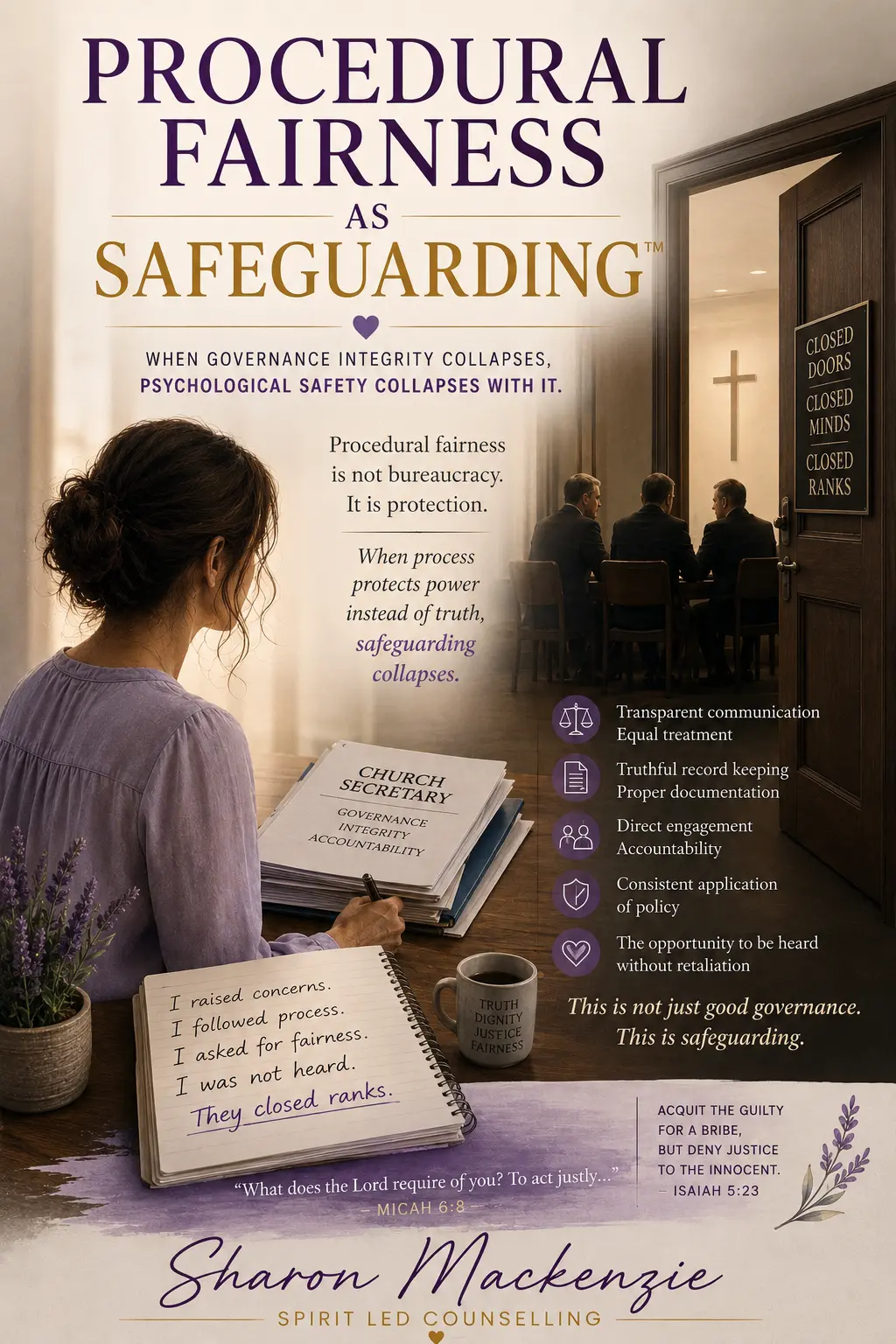
Are complaints and records handled with procedural fairness?
Does the church assess its culture and leadership health before a crisis occurs?
Can people with less structural power speak and be heard without becoming the problem?
Coercive control can be gradual
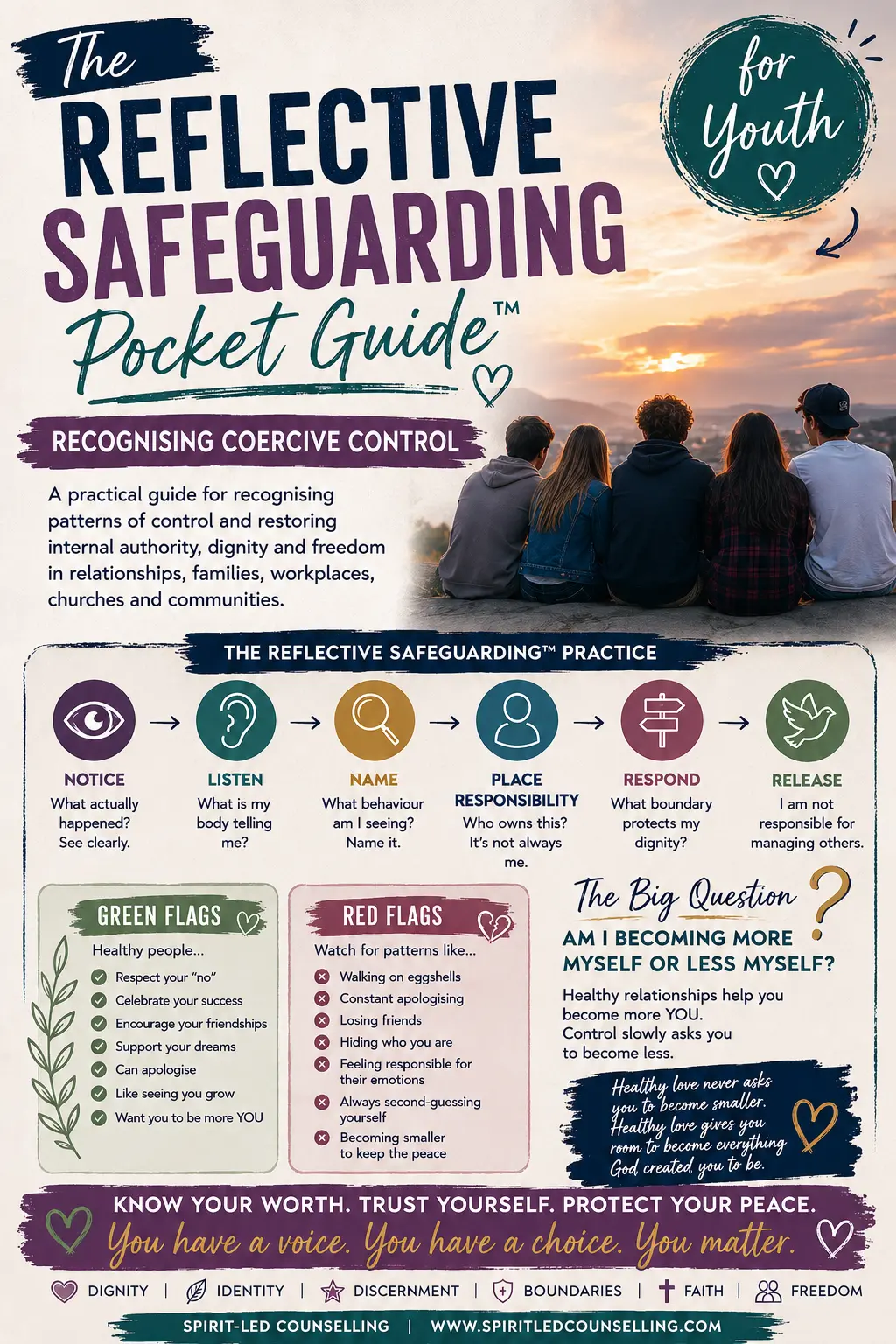
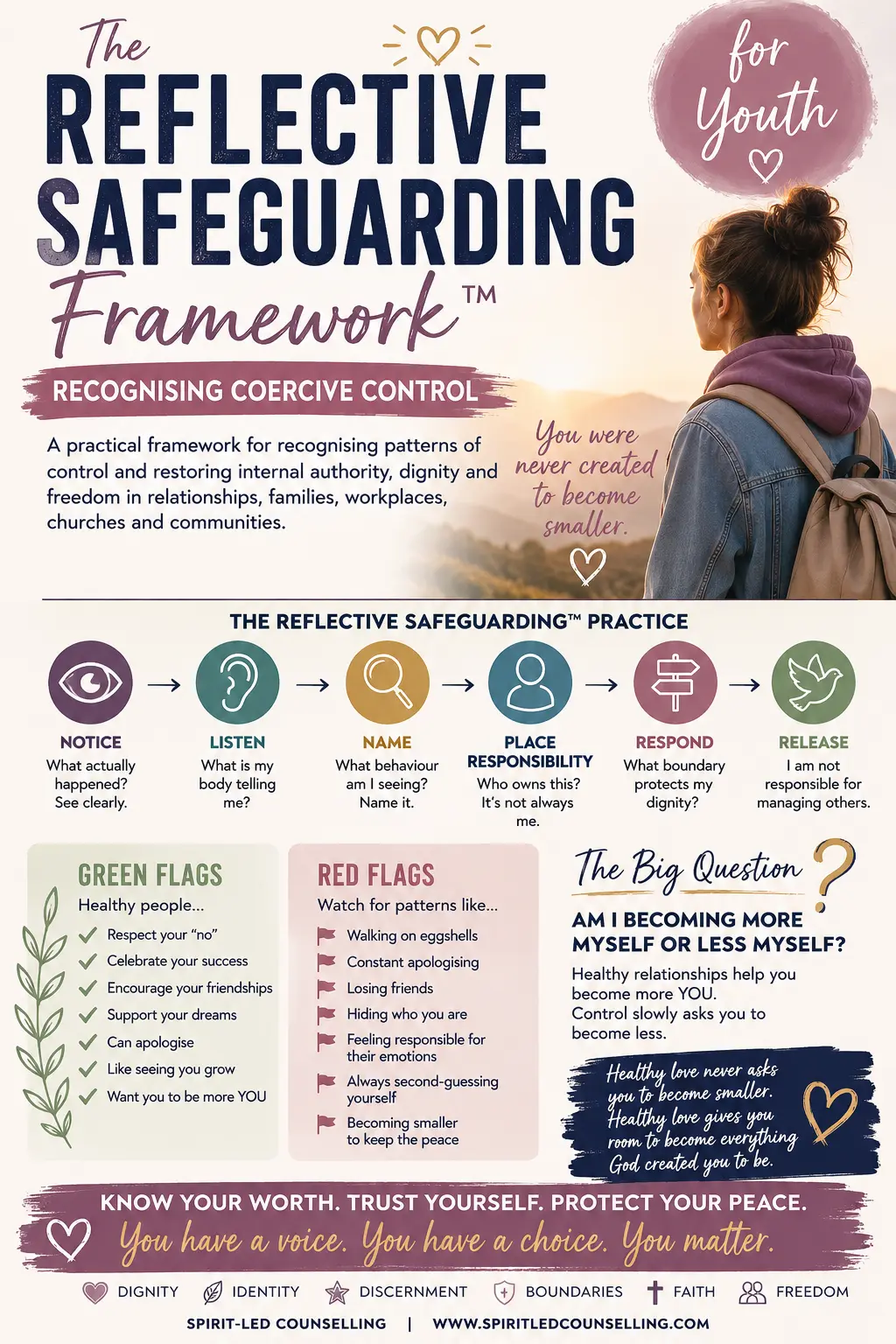
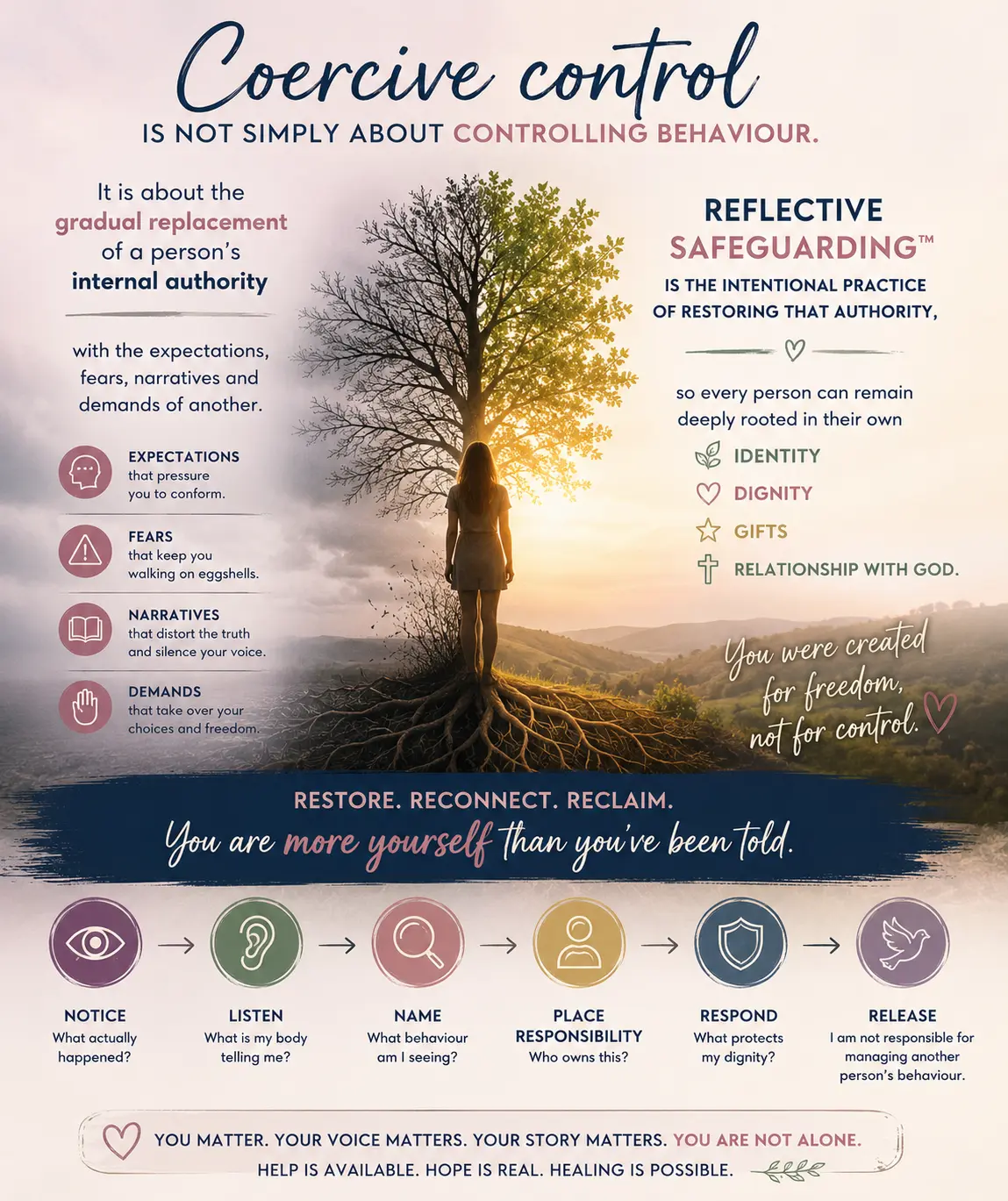
The Reflective Safeguarding Framework™ describes coercive control as repeated patterns rather than single events — patterns that can slowly reduce a person's freedom, confidence, identity and independent judgement. Naming the pattern is not the same as accusing a person; the point of seeing it clearly is to locate responsibility honestly, and to give someone back their choice about participation.
In this article, any reference to abuse or control in the Miller story is described as allegation, or as material the documentary and family accounts explore — not as established fact.
What makes gradual patterns hard to see
By the time a pattern is obvious to an outsider, the person inside it has often lost the reference points that would let them measure it. That is precisely why churches need structures that notice on a person's behalf — and access to independent, appropriately qualified support where someone can think clearly again.
Women, voice and spiritual authority
Women in church systems need genuine pathways to question, disagree, report harm and retain their dignity and agency while doing so. Where those pathways are missing, the cost of speaking is carried entirely by the person with the least structural power — and so, predictably, fewer people speak.
The suppression of female authority is often not dramatic. Procedural fairness is the antidote: the same process, the same records and the same right of reply for everyone, regardless of position.
Church health checks before crisis
A church health check is a regular, deliberate look at culture and leadership while things are calm — far cheaper, humanly and institutionally, than an investigation after harm.
Policies that are actually used
Safeguarding, complaints, conflict-of-interest and pastoral boundary policies that people can find, understand and use — not documents produced only after something goes wrong.
Independent reporting pathways
A named route to raise concerns that does not run through the person the concern may be about, and that cannot be quietly closed by those with the most to lose.
Role clarity and boundaries
Clear boundaries around pastoral and spiritual authority, including what a leader may and may not ask of someone in their care.
Conflict-of-interest safeguards
Recognition that friendship, family ties, employment and loyalty all shape who gets believed — and structures that account for it.
Independent review
Periodic external eyes on culture, decisions and complaint handling, so a community is not only ever assessed by itself.
Listening to those with less power
Deliberately asking whether volunteers, young people, staff and women feel free to disagree — and whether leaders tend to close ranks when questioned.
Mica Miller — remembered for the light she shared. Image: Netflix Tudum
If you watch the documentary, watch it as a leader rather than a spectator. Notice where a different structure might have made a difference: an independent report, a fair process, someone with the authority to act. Then bring those questions back to your own community.
Mica Miller's death was officially ruled a suicide. John-Paul Miller has pleaded not guilty to current federal cyberstalking and false-statement charges and has not been charged in connection with her death. Content in the documentary and in family accounts regarding emotional abuse or coercive control is described here as allegation and exploration, not as proven fact. Nothing in this article claims that safeguarding would definitely have saved her life; the question we sit with is what might have changed if robust safeguarding had been in place.
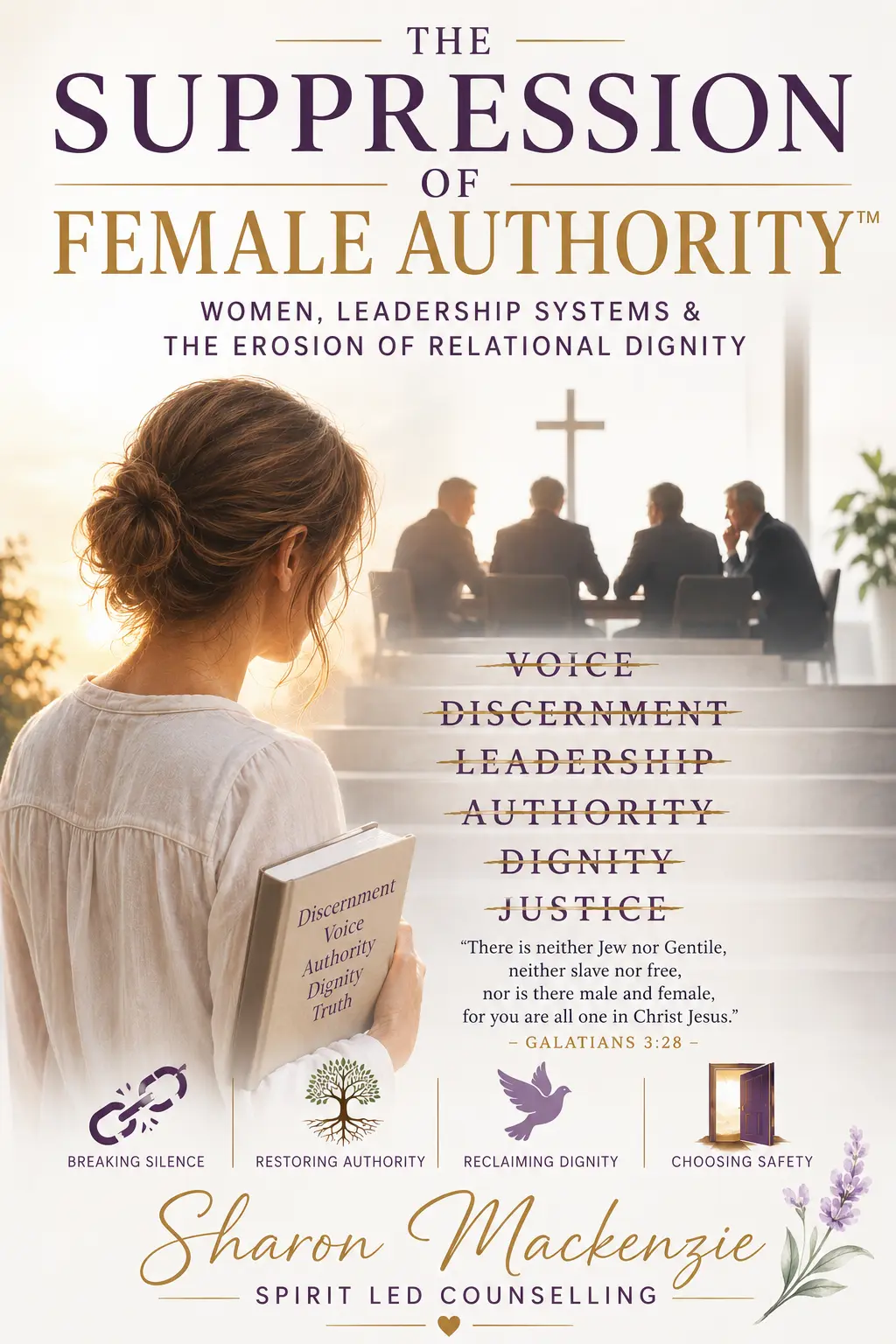
Women, leadership systems, closed-rank leadership, voice, procedural fairness and relational dignity — and the conditions women need to speak, question, lead and remain safe.
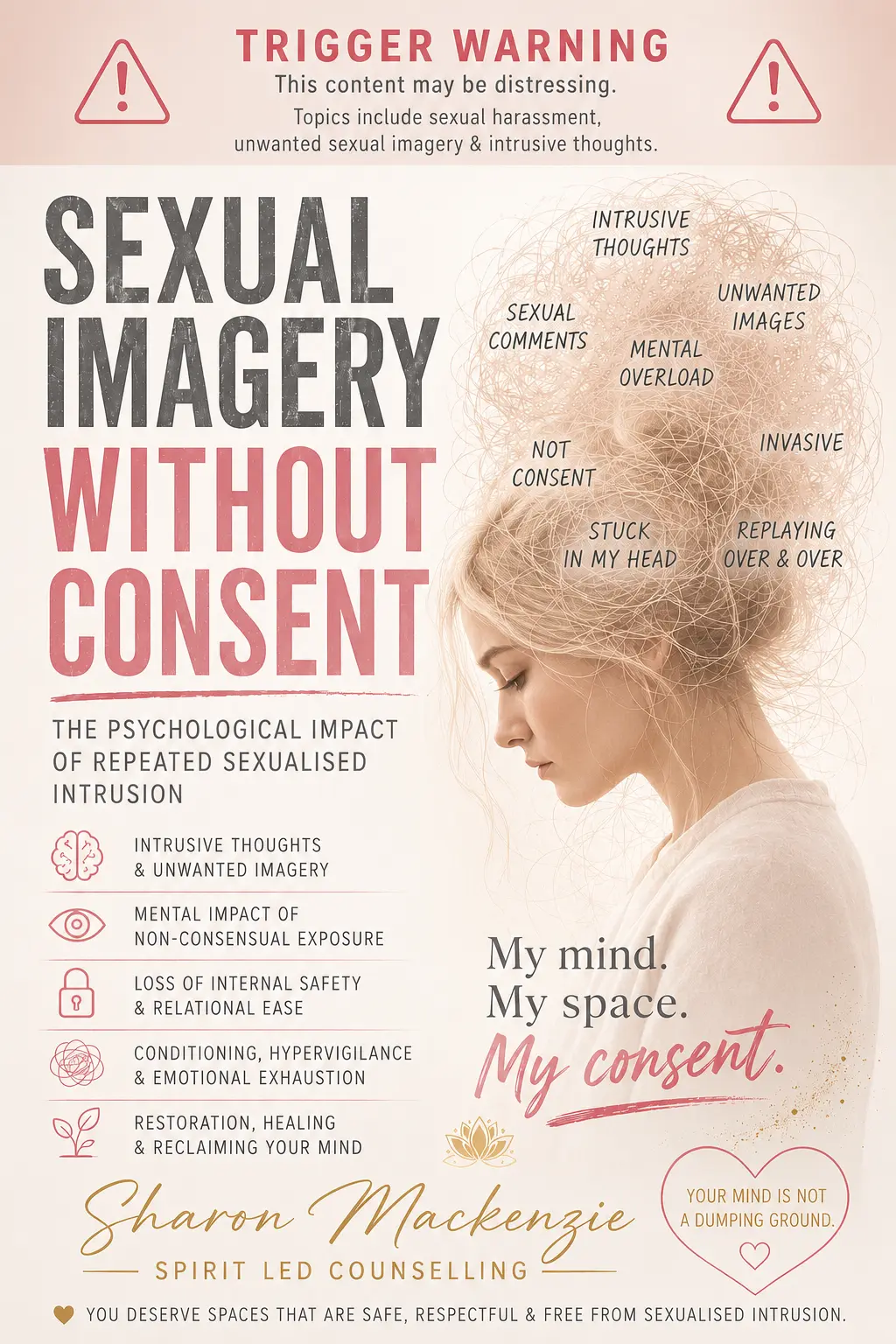
Repeated sexualised intrusion, psychological boundaries, consent and safety — recognising unwanted imagery and reclaiming the right to decide what enters your inner world.
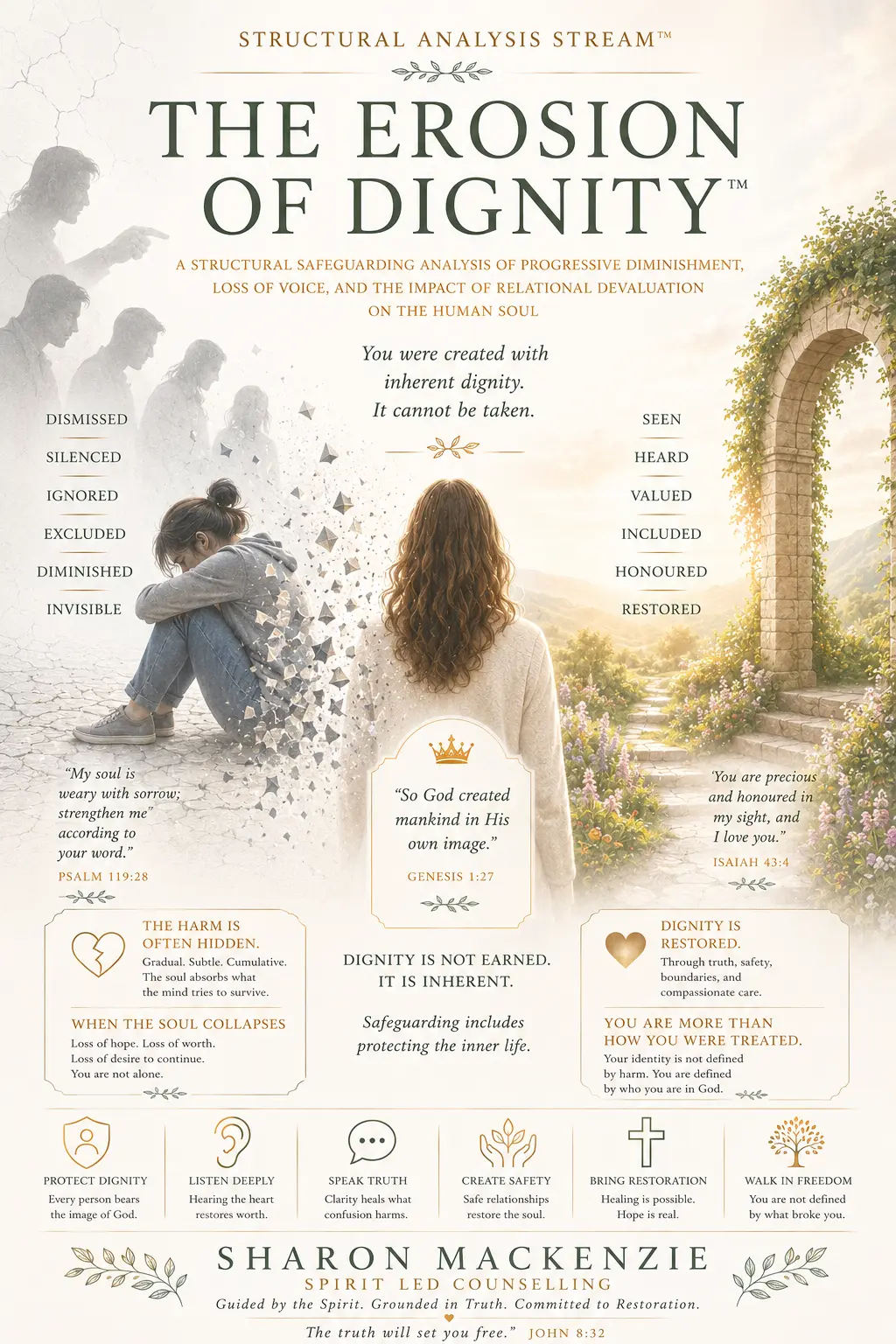
Progressive diminishment, loss of voice, relational devaluation, agency and internal authority — noticing the slow erosion before it becomes the water you swim in.
A concise, practical reflective guide with red and green flags, responsibility, boundaries and safe support — for recognising patterns that slowly replace a person's freedom and sense of self.
The fuller framework on recognising patterns of control and restoring internal authority, dignity and freedom in relationships, families, workplaces, institutions and communities.
How control, spiritual authority and institutional loyalty can intertwine in churches and faith-based organisations — and what healthy, accountable culture looks like instead.
This article discusses domestic abuse, coercive control and suicide. It is educational and reflective — not an emergency service. If you are in immediate danger, call 000. For support in Australia: Lifeline on 13 11 14, or 1800RESPECT (national sexual assault and family violence counselling) on 1800 737 732.